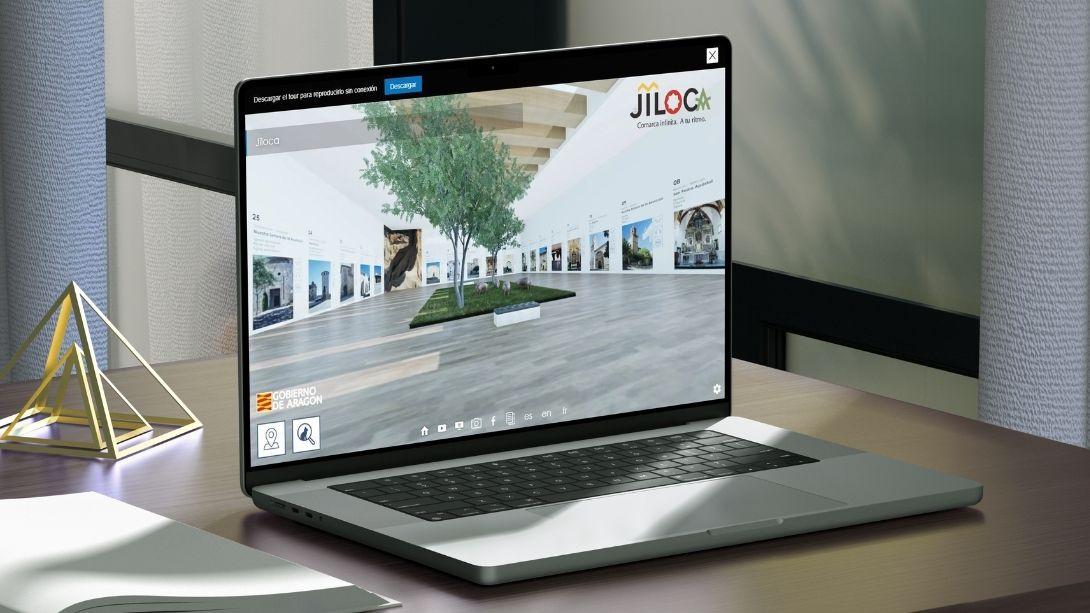
We have developed the Jiloca Region Heritage Virtual Interpretation Center, an initiative focused on the digitalization of tourism and culture that combines virtualization technologies, advanced audiovisual production, and artificial intelligence to bring the region's historical and cultural heritage to new audiences.
The project allows access to the experience via web browsers (PC and mobile) as well as through virtual reality headsets, expanding its reach and facilitating access to content from different devices.
A new way to promote cultural heritage
The main challenge of the project was to modernize the dissemination of Jiloca's heritage, connecting especially with young audiences and creating an engaging, rigorous, and accessible digital experience that would complement in-person visits.
To achieve this, we captured content on-site at various locations throughout the region, integrating 360º panoramas, high-definition professional photography, interactive tours, and informative audiovisual materials that allow for an immersive exploration of the territory.
Innovative Historical Narratives Powered by AI
One of the project's distinguishing features is the incorporation of cinematic-style historical reenactments, developed using CGI and generative artificial intelligence, which facilitate the understanding of historical episodes and contexts through innovative and educational visual narratives.
In addition, the Virtual Interpretation Center integrates an interactive virtual reality game, specifically designed to bring cultural heritage closer to young audiences, fostering learning and interaction through a playful approach.
A Digital Hub for the Region
The result is a unified digital platform that serves as a virtual reference point for the heritage of the Jiloca region, structuring and centralizing multimedia content in an accessible environment designed for future development.
This solution helps strengthen the region's identity, facilitates route and visit planning, and supports a more balanced and sustainable tourism model by expanding access to heritage and promoting a better distribution of tourist flows.
With this project, we reaffirm our commitment to the application of immersive technologies and artificial intelligence to the service of cultural dissemination and the enhancement of heritage, promoting new ways of connecting territories with citizens and visitors.